Smith on WC 2003 and more
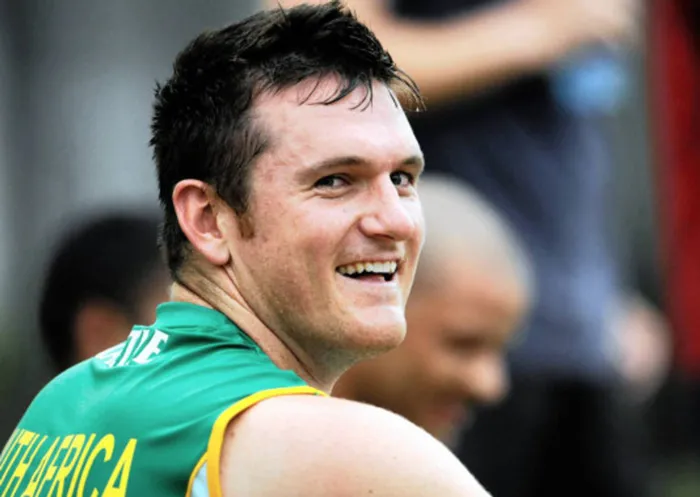
In the first half of an interview with chief sports writer Kevin McCallum, Smith speaks of his memories of that mad month of March in 2003, and of how he has grown up as a captain and a person. In the first half of an interview with chief sports writer Kevin McCallum, Smith speaks of his memories of that mad month of March in 2003, and of how he has grown up as a captain and a person.
The 2003 World Cup was a strange time for South African cricket, and even stranger for the 22-year Graeme Smith. Initially left out of the squad, he was called up after an injury to Jonty Rhodes and less than a month later he was named as captain of South Africa. In the first half of an interview with chief sports writer Kevin McCallum, Smith speaks of his memories of that mad month of March in 2003, and of how he has grown up as a captain and a person.
Kevin McCallum: Before the 2003 World Cup you had been left out of the World Cup squad. Yet before the tournament ended, you had been made captain of the team. When you found out you had been called up to replace the injured Jonty Rhodes, you had been in a cinema catching a movie during the daytime, weren’t you?
Graeme Smith: You know, being left out of the World Cup squad back then I can feel what the guys who have been left out of this one are going through. I’d been part of the squad the whole year and ended up getting left out. I was told on the morning of the fourth day of the Boxing Day Test that I wasn’t in the team, and I was walking out to bat that day, so I was a bit emotional and had a lot of tension.
I think it was an important phase in my career because it kind of reflected on the things I needed to improve on. There are two ways to look at those things: you can start blaming people or you can look at yourself. I chose to look at myself. I went away and worked on my game. I scored a lot of runs, I played well in a warm-up game against the World Cup team and did well.
I can clearly remember being in a movie and having a feeling something had happened. It was kind of weird. I walked out of the movie, turned on my phone and got a message to tell me that Jonty Rhodes was out of the World Cup with a broken hand. I was told I had to be on a plane to Joburg that afternoon, so I had gone through this entire rollercoaster of emotions. It was amazing to think I would be part of this World Cup in South Africa, and I was just 22.
KM: It was quite a strange and disappointing tournament for South Africa. The team were up and down, and then came that game in the rain against Sri Lanka in Durban.
GS: My first match was against New Zealand and I remember coming into the squad, and it was quite tense. Coming from the outside you could feel the pressure the guys were feeling. I didn’t carry much of the baggage that the others had had to in the initial part of the tournament. We batted well in that game against New Zealand (Smith scored 23, Gibbs 143 in an SA total of 303), but then the rain came and they had to chase 220-something and Stephen Fleming got 130-odd and they won.
For the Sri Lanka game myself and Herschelle got off to a really good start (first-wicket partnership of 65 from 11.1 overs), and we were in control for most of the game, and then came the Durban rain. It was a hell of a disappointing way to end the tournament. I remember the coaching staff had the list with the Duckworth-Lewis calculations and with it being at night you can’t see the rain coming in the middle. What I remember of the incident is that Nicky (Boje) grabbed the list and ran out on to the field, and as he ran out the coaching staff were shouting at him out the window to tell him that the totals on the sheet were to tie and that they needed one more run than that to win. But with the crowd and the tension he couldn’t hear them. Nicky gave Bouch the sheet, and once the coaches got the message to Nicky that they needed one more, Steve Bucknor wouldn’t let him back on the field. It was just the rush and the pressure. It was madness.
KM: Your ODI captaincy will be bookended by the World Cup now that you’re going to retire after this tournament. After a game at the Wanderers I was having a drink in the Long Room with Huge Page, then one of the national selectors, and he asked what I thought about making you captain. It might have been the drink talking (laughs), but I told him I thought it was a good idea. Two weeks later you were the new captain.
GS: That was a weird period in my life. Even though the World Cup was such a disappointment for the country, for me, and the way I was called up late into the team, was a positive to gain that experience. You deal with disappointment differently at different times in your career. I was in a decent space, even though the rest of the country was in despair.
I remember getting a call from Omar Henry (then convenor of selectors) asking me if I could meet him at the Holiday Inn in Cape Town. I rocked up there and all the selectors were there. They sat me down for a casual lunch and starting asking me about team dynamics, leadership and stuff like that, random questions. I left. I didn’t know what was going on and went back home.
And then the process started. I don’t know exactly how many days it was later, but I can clearly remember getting a call from Polly one morning and he told me, “They’re going to offer you the captaincy and I want you to take it”. I phoned my dad and I phoned Eric (Simons, then national team coach), who came quite hard at me. Eric asked me if I knew what I was getting myself into. He was trying to out me under pressure to know exactly what was coming my way. My dad kept asking me “are you sure, are you sure you want to do this” (laughs).
I had a fear of being 22 years old and not having the experience, but I also had a fear of not being offered the job again. I thought I could do the job, but at that time I never understood how much it took to captain South Africa.
KM: I remember in an interview we had two days before you were made captain, and you telling me “people shouldn’t be afraid of my age because I’m not”. Man, that was used in some TV ad with you later. I never saw a single royalty…
GS: (laughs) When I got the captaincy all the senior players taking me out for a drink in Cape Town to celebrate. I don’t remember one negative thing from any of the players. The only thing was that Polly had an edgy relationship with Eric after that because he didn’t know where he stood, but my relationship with Polly and the others was always very good.
The thing I found difficultly with the most was trusting my decision making on the field. I felt comfortable off the field, in the team room with the guys, discussing tactics, asking them to do certain things. But on the field when you have Shaun Pollock bowling, and he’s perhaps not bowling too well, you tell yourself, I should take him off, but then you think: “This is Shaun Pollock bowling.” (laughs)
KM: Getting back to World Cups. Is South Africa obsessed with the World Cup? It seems that because of what happened in 1992, with the loss in the rain in the semifinal against England, that the country is desperate to win that one tournament. Yet the World Cup is just one part of international cricket. It’s not the be-all and end-all, is it?
GS: International cricket has a very different system to rugby and cricket, which are largely club-based and apart from the Tri-nations in rugby, for example, the World Cup is the most important. In cricket, touring other countries and winning in those countries is the pinnacle. Winning in Australia and England is a massive achievement, some of the biggest things in my career for me, and I think Jacques Kallis, who has been around for a while will tell you the same thing.
The World Cup for us is different. The expectation of the public and the media is different for the team. We’re used to tours, and the preparation for tours because that’s 90 percent of our lives. The World Cup, with its competition play, is different, and the expectations from the media and the public are different.
KM: At the 2007 World Cup, You had played well during the tournament and then in the semifinal against Australia went at them hard. Was that a plan? A change of tactic?
GS: We didn’t really plan to take them on. We had spoke about being positive, but we hadn’t talked about going over the top. We didn’t want to be timid, but having said that we didn’t really cope with ourselves well that day. I think we played some loose shots we shouldn’t have. Instead of assessing the conditions and saying that maybe 240 would have been a good score, we thought we needed to get 300 because Australia had such a powerful batting line-up. Instead of controlling our own game, we tried to play out of our skins.
KM: When you guys got back from the West Indies, there were calls for you and Mickey Arthur to be strung up. I remember a senior editorial person on our paper suggesting we write that very story, but we refused. It was too desperate a reaction, and besides, Mick and yourself had spoken to us of a plan, a programme, to become the number one team in the world. Was the World Cup a starting point for that, or had the process started before the World Cup?
GS: I think that World Cup was a catalyst for me to take my captaincy to the next level. That time after the World Cup was a terrible one. You’ve lost in the semifinal, everyone is on your back, there’s rubbish written in the media – you kind of feel like a murderer walking on the street (laughs). People are looking at you strangely, you don’t like you can live a normal life until it all calms down.
For me, it was a period in which I reflected on my career and myself as a person, and started working with Paddy (Upton, former South African fitness trainer, who has become a successful mental conditioning coach, and is currently working with Gary Kirsten at India) in organising my life. From where I had been when I was 22 to where I was now, a lot had changed. The network of people around me had become so massive and coping with that wasn’t easy. I started organising my life, starting working on my patterns of play. When I was younger I was that determined, 100 percent all-the-time guy, the one who was saying “I’m going to show you”. Whereas a couple of years later I needed more balance and consistency in my life.
Mickey and I started talking about how we wanted to play and who we wanted involved, and it started with that Pakistan tour. We took some very bold decisions there. We left Polly out of the Test side, we went for more pace, we picked six batters to do a job. We started preparing guys in different ways. It seemed that me getting more in control of my life and my captaincy seemed to coincide with that 18-month period where we did so well in Australia, England and India.