WATCH: Gayton McKenzie slams Pastor Anosike's R135m bid

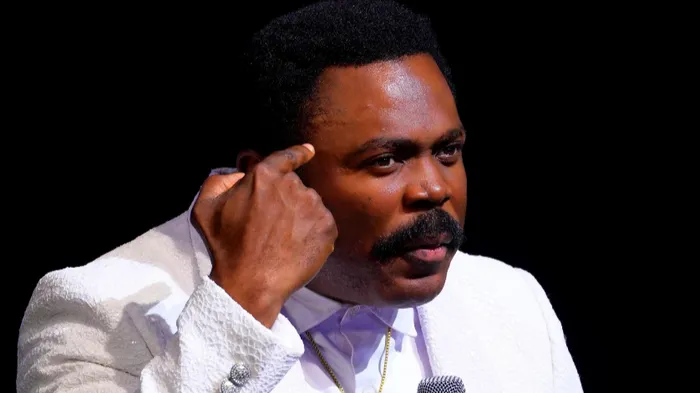
Pastor John Anosike has defended his reported R135 million bid for Cape Town’s iconic Good Hope Centre as debate continues over the future of the CBD landmark.
Image: Pastor John Anosike/ Facebook
Pastor John Anosike has defended his reported R135 million bid for the iconic Good Hope Centre in Cape Town’s CBD after Sports, Arts and Culture Minister Gayton McKenzie publicly criticised the proposed acquisition, citing he would not allow it to become open to drugs and would challenge it in court.
Anosike, leader of Spirit Revelation Ecclesia, announced to his congregation that the church had bought the Good Hope Centre following a City property auction.
The announcement has since drawn political and public scrutiny. During a Facebook Live broadcast, McKenzie, who also leads the Patriotic Alliance, voiced his opposition to the reported deal and warned that it should be used for Arts and Culture.
"What Nigerian church will be there, over our dead bodies, I am saying it now today, there will be no Nigerian church there, you are not going to take Arts, Culture spaces and give to Nigerian churches, that one will not happen, "McKenzie boldly stated.
"I am telling you today, if that Nigerian pastor knows what is good for him, he must keep that money, we will never allow it to be sold to Nigerians...That pastor, my advice to him...take your money and invest in Nigeria because we will never give you peace there, we will fight you in the highest court, you will never take it, Nigerians having church there, one two three, then the place will become a place of drugs..."
McKenzie also remarked that the DA was selling off the Good Hope Centre and the Bellville Velodrome while they (PA) is coming into power.
In his statement, Anosike described McKenzie’s remarks as political intimidation and said they risk discouraging lawful investment by foreign residents in South Africa.
In a statement issued this week, Anosike said he followed the official public auction process run by the City of Cape Town when bidding for the property.
According to the statement, he registered for the auction, complied with the bidding requirements and submitted a bid of R135 million for the venue.
“The process is fully documented, lawful, transparent and publicly recorded,” Anosike said, adding that he believed he had been singled out for criticism despite several other properties being sold during the same auction.
The Good Hope Centre was among 53 City-owned properties that went under the hammer earlier this year as part of the municipality’s programme to dispose of assets considered surplus to operational requirements.
However, the City has stressed that no sale has yet been finalised.
Shortly after Anosike made his announcement, City spokesperson Luthando Tyhalibongo said the municipality had begun a detailed post-auction audit to determine the validity of bids received following the February 26 auction.
“The City has not accepted bids for any of the sites as yet, nor has the validity of the bids been confirmed as it is necessary to first conduct detailed vetting and due diligence in the coming weeks,” Tyhalibongo said.
He said the process includes checks on bidders’ tax status, ownership details, financial compliance and risk considerations, as well as whether the requirements of the Municipal Asset Transfer Regulations have been met and whether the prices achieved align with property valuations.
Tyhalibongo said that if a qualifying bid is confirmed for the Good Hope Centre, the bidder would also have to comply with the terms of the Offer to Purchase and Development Facilitation Agreement, while the City assesses the development proposal against heritage requirements and conditions relating to redevelopment and public access.
Once the due diligence process has been completed, qualifying bids will be presented to the City’s Immovable Property Adjudication Committee and, where required, to council for final approval.
The proposed sale has also drawn protests and criticism from some activists and political groups who argue the building should instead be used to help address Cape Town’s housing shortage.
Anosike said the proposed acquisition would likely be financed through bank loans and voluntary contributions from supporters rather than an upfront payment.
He said donations were not solicited and that contributions were made voluntarily after news of the reported bid became known.
According to the statement, the church intends to use the venue for worship services, conferences and community gatherings.
The pastor also addressed several controversies that have surfaced in recent weeks, alleging congregants were asked to pay R10 000 for what were described as “tickets to heaven”.
Anosike rejected the claim, saying his ministry does not charge people for attending church services, prayer or counselling and describing the allegation as false.
The statement also disputed claims circulating online and in some reports that he owns multiple properties in the Cape Town suburb of Constantia or that he has presented himself as a South African citizen. Anosike said he has consistently stated that he is a permanent resident of South Africa.